
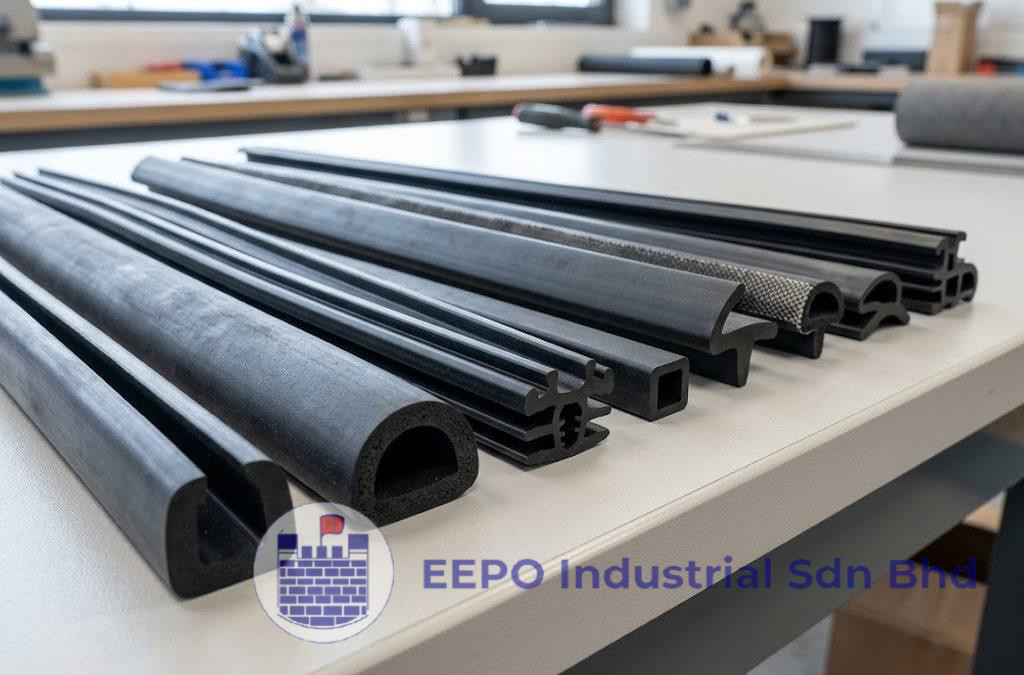
Rubber strips can be found in all kinds of industrial equipment. Sometimes they sit around the edge of a door or panel, and sometimes they are placed between two parts of a machine. They are simple, but they can be useful in many different situations.
EPDM is one material you may see quite often, especially for equipment that stays outdoors. Neoprene is another type and is used in various industrial settings, including areas where the rubber could come into contact with oil.
For jobs involving fuel or petroleum, nitrile may be considered instead. Silicone is commonly seen in applications where temperature is a concern, as it can be used across a wider temperature range.
What Exactly Are Industrial Rubber Strips?
Rubber strips are pieces of rubber produced in long and narrow shapes. They come in different measurements, so the size can be chosen according to the space where it will be fitted. You may also come across both solid and sponge types.
- EPDM is often used outside because rain, sunlight and changing weather are less of a problem for this type of rubber.
- Neoprene is another common choice, especially for general work where some contact with oil or chemicals is possible.
- Nitrile is usually chosen when the job involves oil or fuel.
- Silicone is different because it is useful in places that become very hot or very cold.
So, choosing a rubber strip is not just about finding the correct size. You also have to think about where it is going and what it will be exposed to.
Common Industrial Applications
Rubber strips can be used in different parts of a factory, workshop or industrial facility. Some applications are quite simple, while others depend on the type of equipment being used.
1. Sealing and Weatherstripping
One of the common uses of rubber strips is sealing a gap between two surfaces. They may be installed around doors, windows, hatches or machinery covers.
For outdoor equipment, the strip can help limit the amount of rainwater and dirt entering through the edges. The same idea is also used on some industrial vehicles and containers. Since rubber can compress when the door or cover is closed, it can fit into small gaps between the surfaces.
2. Vibration Dampening and Cushioning
Machines can create vibration while they are operating. Over time, constant movement between two surfaces may contribute to noise or wear.
A rubber strip can be placed between these surfaces to provide a layer of cushioning. Instead of having two hard materials directly touching each other, the rubber sits in between them. This is useful for certain machines, panels and other equipment that experience regular movement.
3. Electrical Enclosure Seals
Electrical equipment usually needs some protection from the surrounding environment. Dust and moisture entering an enclosure can cause problems for the components inside.
Rubber strips can be fitted around the edge of an electrical enclosure or control panel door. When the door is closed, the rubber is compressed between the two surfaces. EPDM may be used for outdoor applications where the enclosure is regularly exposed to weather.
4. Flanges and Gasket Stripping
Rubber strips can also be cut and used as gasket material. In this type of application, the rubber sits between two joining surfaces.
You may see this around pipes, covers or other parts that need to close tightly. What kind of rubber is used can change depending on the job, especially when heat, pressure or liquids are involved.
The Practical Benefits of Using Rubber Strips
Rubber is useful here because it does not have to stay completely rigid. It can bend or press down slightly when fitted between surfaces, including areas that are not perfectly flat.
There are plenty of sizes and rubber types to choose from as well. This makes it easier to find something that fits the equipment and the place where it will be used.
Maintenance is another consideration. Depending on the installation, a worn strip can usually be removed and replaced without changing the entire component around it.
The type of rubber can also be selected according to the environment. A strip used outdoors, for example, may have different requirements from one that regularly comes into contact with oil.
Choosing the Right Strip for Your Project
Before choosing a rubber strip, it is useful to know where it will be installed. Temperature, outdoor exposure, oils, chemicals and the amount of compression required can all affect the choice.
For example, EPDM may be considered for outdoor use, while nitrile is commonly used where resistance to oils and fuels is important. Silicone may be considered when temperature is a major concern.
The dimensions matter too. A strip that is too thin may not close the gap properly, while one that is too thick may be difficult to compress. Checking the required width and thickness before ordering can help avoid this problem.
For projects that require a particular size, shape or rubber material, EEPO Rubber Products provides custom rubber components that can be produced according to the requirements of the application.
💡 Choosing the Right Strip for Your Project
Not all rubber strips are created equal. To get the longest lifespan out of your material, you need to match the rubber compound to your specific environment. If you are dealing with outdoor exposure, choose EPDM. If your machinery uses heavy oils, Nitrile is your best bet.
For high-performance, precision-cut rubber components tailored to your industry’s exact specifications, explore the full range of custom solutions at EEPO Rubber Products.